

The Best Books About Bitcoin
Whether you’re just getting started or you want to deepen your knowledge, you’ll find the right books on Amazon!
Discover more now
Anzeige

    The Elliott Wave Theory: Predicting Market Cycles

    17.10.2023 962 times read 3 Comments
    • The Elliott Wave Theory posits that financial market cycles emerge from investors' psychological predispositions manifesting in waves.
    • It suggests that a main trend is followed by a corrective phase, both comprising a specific and predictable pattern of waves.
    • Traders use this theory to forecast market trends by identifying the wave patterns and applying Fibonacci ratios to predict retracements.

    Welcome to this comprehensive guide on the Elliott Wave Theory, a powerful analytical tool that has the potential to supercharge your trading strategy! Our focus in this piece is to bring you a clear, easily understandable explanation of this theory and how applying the Elliott Wave in trading can give you an edge in predicting market patterns. This knowledge could prove invaluable whether you're a novice just stepping into the world of cryptocurrency or a seasoned investor looking to diversify your portfolio.

    Advertisement

    Introduction to Elliott Wave Theory

    The Elliott Wave Theory, named after its creator Ralph Nelson Elliott, is a form of technical analysis used to predict the future direction of the market based on past price actions and cycles. Essentially, the theory suggests that markets move in specific patterns, called waves, that are driven by the collective psychology of investors.

    The Best Books About Bitcoin
    Whether you’re just getting started or you want to deepen your knowledge, you’ll find the right books on Amazon!
    Discover more now
    Anzeige

    Introduced in the 1930s, this theory has stood the test of time and gained acceptance among various financial disciplines, including the ever-evolving realm of cryptocurrency trading. Its value lies in its ability to identify trends and reversals, offering traders the foresight to make informed decisions.

    At the core of the Elliott Wave Theory are the five-wave pattern moving in the direction of the trend, and a three-wave counter-trend pattern. The completion of a five-three move defines a full "Elliott wave cycle". These patterns are a fundamental part of the theory’s functionality and their understanding is crucial for its practical implementation in trading.

    Now, let's delve deeper and explore some fundamental concepts related to the Elliott Wave Theory.

    Understanding Market Cycles with Elliott Wave Pattern

    Applying the Elliott Wave pattern, you get to understand the structure of market cycles better. These cycles illustrate repetitive patterns driven by the market's collective mood, swinging between optimism and pessimism. Often, when a trend starts, it is marked by a wave of optimism causing price to shoot up. This is known as the impulse wave, which features five distinctive moves.

    The impulse wave is followed by a period of market correction, where traders looking to cash in on profits send prices tumbling down. This period of downward trend actually forms the second half of the Elliott Wave pattern, known as the corrective wave. The corrective wave typically consists of three moves and represents a counter-trend to the initial impulse wave.

    Understanding these complementary phases of market sentiment can provide a significant edge in predicting future price movements. Remember that Elliott Wave Theory relies on the idea that markets move in predictable patterns and that history often repeats itself. This reflects the human nature driving the markets: predictable in its unpredictability.

    Next, let's walk through practical examples of how to use the Elliott Wave in trading, illustrating how this theory can help you make timely and informed trading decisions.

    Advantages and Disadvantages of the Elliott Wave Theory

    Pros Cons
    Identifies market cycles and patterns accurately Subjective and open to individual interpretation
    Provides specific entries, exits, and stop loss levels Relies heavily on accurate charting and drawing
    Can predict broad market trends Lower success when used on lower time frames
    Useful in conjunction with other analysis tools Detailed knowledge and experience required

    The Fundamental Principles of Elliott Wave in Trading
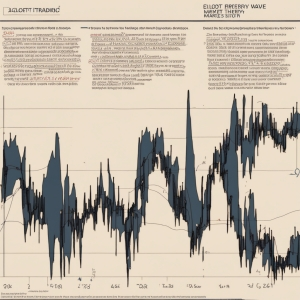
    The Fundamental Principles of Elliott Wave in Trading

    Grasping the fundamentals of the Elliott Wave theory equips traders with a clearer perspective of market scenarios. Understanding these principles allows you to detect market trends and reversals in advance, empowering you to make informed trading decisions accurately. So, what are these guiding principles?

    The first principle states that the market price action is a direct reflection of changes in investor psychology. It's this switch between collective optimism and pessimism that drives the five-wave impulse sequence and the three-wave corrective sequence.

    Moving on, the second principle suggests that each Elliott Wave, whether impulse or corrective, subdivides into smaller waves. The beauty of this concept is that it applies to waves of any size, making the theory fractal in nature. This inherent self-similarity at different scales gives the Elliott Wave Theory its unique adaptability to different timeframe charts.

    The third principle relates to Fibonacci numbers, a sequence where each number equals the sum of the two preceding ones. Interestingly, Elliott discovered that the wave structures align pretty well with Fibonacci ratios, assisting in predicting the probable end of waves and the start of the correction phases. Traders often combine the use of Fibonacci retracement levels with the Elliott Wave Theory to optimize their market timing.

    To tie it all together, using the Elliott Wave in trading involves identifying the wave patterns in market price data, understanding the underlying cyclical principles, and finally interpreting this information to forecast future price movement. Mastering this takes time and practice, but the rewards in terms of trading precision could be well worth the effort.

    Predictive Power of Elliott Wave Theory

    One of the most appealing aspects of Elliott Wave Theory is its predictive capabilities. By understanding and identifying the different wave patterns in the market, traders can anticipate possible price moves before they happen. This allows for timely investment decisions based on anticipated price action, rather than reacting to changes as they occur.

    This ability to forecast market movements is reliant on the principle of market sentiment repetition. Markets, influenced by investor psychology, tend to exhibit similar behavior patterns over time. Thus, recognizing these patterns through the Elliott Wave Theory can offer priceless insights into possible future price action.

    In essence, if you've identified an impulse wave in its early stages, you can usually predict with some degree of certainty that there will be a total of five up-and-down moves before the corrective phase begins. Similarly, once a corrective wave is underway, you can anticipate precisely when it's likely to end, paving the way for a reversal or continuation of the trend. The predictive power of Elliott Wave Theory places market participants in a preferable position, armed with valuable insights into what's likely to transpire in the markets.

    Nevertheless, it's important to remember that as with all trading strategies and methodologies, accurate prediction isn't guaranteed. Market behavior can be influenced by countless factors and unpredictability is a part of the trading world. Using Elliott Wave Theory should be a part of a rounded trading strategy, backed up with other forms of research and analysis.

    Practical Application of Elliott Wave Theory in Trading
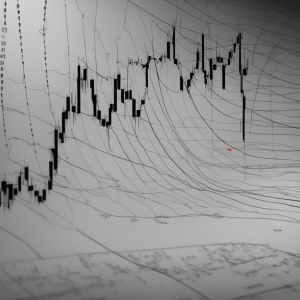
    Practical Application of Elliott Wave Theory in Trading

    Let's now examine how the Elliott Wave Theory can be practically applied within trading strategies. To maximize its benefits, traders should first identify a starting point to begin the wave count, which can either be a significant market high or low.

    The traders then pinpoint the five-wave sequences and three-wave counter trends, taking into account the inherent fractal nature of these sequences. In essence, each larger wave consists of a series of smaller waves. More often than not, recognizing these patterns in every time frame will reveal the market's overall trend.

    The Elliott Wave Theory also emphasizes the importance of Fibonacci ratios. The application of Fibonacci retracement levels in conjunction with wave analysis can be particularly beneficial for traders. These mathematical values can help predict the retracement levels that often align with the completion of wave sequences. By accurately estimating these key levels, traders can optimize their entry and exit points, enhancing their overall trading returns.

    Furthermore, one significant advantage of applying the Elliott Wave in trading is the theory's flexibility. Whether you're involved in short-term day trading or long-term investment strategies, the theory's principles can be adapted accordingly to suit your trading goals.

    However, it's crucial to note that like all trading strategies and tools, the Elliott Wave Theory isn't a foolproof method. It merely aids in making probable predictions, and there will always be instances where the market will move against these predictions. Remaining adaptable and using the Elliott Wave Theory in conjunction with other technical analysis tools can help overcome such trading hurdles.

    Conclusion: Impact of Elliott Wave on Trading Strategies

    In conclusion, the use of Elliott Wave in trading comes with a profound effect on one's trading strategies. Bringing an unprecedented level of depth and insight into the mechanics of market movement, the Elliott Wave Theory is indeed a trader's best ally in navigating the often unpredictable world of financial markets.

    The implementation of this wave theory, with its focus on market psychology and cyclical trends, equips a trader with the tools to not just withstand market volatility but also to capitalize on it. The Elliott wave principle’s capability to shed light on the potential future price points makes it a compelling strategy for long-term investment decisions, as well as short-term trading setups.

    Understanding and proficient use of the Elliott Wave pattern, combined with other technical analysis tools like Fibonacci retracement levels, can substantially enhance the accuracy of your market predictions. On the cutting edge of trading strategy, the Elliott wave principle is a game-changer, heralding a new era of informed and strategic trading.

    Ultimately, the success of applying the Elliott Wave Theory lies in your hands - remember that consistent practice and experience in trading will refine your mastery of this complex yet invaluable tool.


    Experiences and Opinions

    Nutzer beschreiben die Elliott Wave Theory als wertvolles Werkzeug für die Marktprognose. Viele Anwender berichten, dass sie mit dieser Methode ihre Handelsstrategien verbessern konnten. Eine häufige Aussage: "Die Analyse hilft, Marktzyklen besser zu verstehen." Das bestätigt die Erfahrung von Tradern, die regelmäßig auf die Elliott-Wave-Analysen zugreifen.

    Ein typisches Problem: die Komplexität der Theorie. Einige Nutzer fühlen sich überfordert, besonders bei den ersten Versuchen. "Am Anfang war es schwer, die Wellen korrekt zu identifizieren," sagt ein Anwender. Trotzdem bleibt die Mehrheit optimistisch. "Mit etwas Übung wird es einfacher," so ein anderer Trader.

    Advertisement

    Die Kosten für Dienstleistungen, die Elliott-Wave-Analysen anbieten, werden oft diskutiert. Einige Nutzer berichten von positiven Ergebnissen trotz der Investitionen. "Es lohnt sich, wenn man die richtigen Signale nutzt," erklärt ein langjähriger Anwender. Auf Plattformen wie Trustpilot zeigen Bewertungen eine klare Tendenz: Viele sehen die Elliott Wave Forecast-Dienste als hilfreich. Allerdings gibt es auch kritische Stimmen. Einige Nutzer beklagen unerwartete Gebühren nach Testabonnements.

    Die Plattform Elliott Wave Trader erhält ebenfalls viel Lob. Anwender äußern sich positiv über die Qualität der Analysen und den Support. Ein Nutzer beschreibt die Analysten als "professionell und zuverlässig". Die Verbindung zwischen Theorie und praktischen Handelsentscheidungen wird häufig hervorgehoben. "Die Vorhersagen haben mir geholfen, vor Marktrückgängen auszusteigen," berichtet ein Trader.

    Die Community rund um die Elliott Wave Theory ist aktiv. Nutzer tauschen sich in Foren regelmäßig über ihre Handelsstrategien und Erfahrungen aus. Dabei wird betont, dass Geduld und kontinuierliches Lernen essenziell sind. "Man muss die Wellen immer wieder üben, um besser zu werden," rät ein erfahrener Anwender.

    Erfahrene Trader schätzen die Möglichkeit, durch die Elliott-Wave-Analysen den Markt besser vorherzusagen. "Ich vertrauen den Analysen, weil sie oft zutreffen," sagt ein Nutzer, der seit Jahren dabei ist. Ein weiterer Anwender betont: "Die Analyse hat mir geholfen, meine Anlagestrategie grundlegend zu ändern."

    Zusammenfassend zeigt sich: Die Elliott Wave Theory bietet viele Chancen, erfordert jedoch Engagement. Nutzer sind sich einig, dass die Methode wertvoll sein kann. Wichtig bleibt, sich kontinuierlich weiterzubilden und die Konzepte richtig anzuwenden. Die positiven und negativen Erfahrungen spiegeln die Komplexität des Handels wider. Die Elliott Wave Theorie ist ein nützliches Werkzeug, dessen volles Potenzial Anwender durch Übung und Geduld ausschöpfen können. Mehr Informationen finden sich auf ElliottWaveTrader.


    Understanding The Elliott Wave Theory: Predicting Market Cycles

    Understanding The Elliott Wave Theory: Predicting Market Cycles

    What is the Elliott Wave Theory?

    The Elliott Wave Theory is a method of technical analysis for predicting market cycles by identifying extremes in investor psychology, highs and lows in prices, and other key financial market factors.

    How does the Elliott Wave Theory work?

    Elliott Wave Theory works by identifying recurring wave patterns that reflect the mass psychology of the investors. It assumes that markets in financial assets have strong trends that are determined by the shared behavior of traders.

    What are the main components of the Elliott Wave Theory?

    The main components of the Elliott Wave Theory are impulse waves and corrective waves. An impulse wave consists of five sub-waves and moves in the same direction as the trend of the next larger size. A corrective wave consists of three sub-waves and moves against the trend of the next larger size.

    Can the Elliott Wave Theory accurately predict market trends?

    While the Elliott Wave Theory can provide a framework for understanding market structures and potential future movements, like any analytical method, it should not be relied upon exclusively. The predictive accuracy of the Elliott Wave Theory can vary.

    Who developed the Elliott Wave Theory and when?

    The Elliott Wave Theory was developed by Ralph Nelson Elliott in the late 1920s. He proposed that market prices unfold in specific patterns, which practitioners today call Elliott waves.

    Your opinion on this article

    Please enter a valid email address.
    Please enter a comment.
    wow this Elliott wave thing sounds prety cool but tbh im not totaly sure i get it lol. Like it says markets move in "predictabl pattens" but isint the stock market always up n down and unpredicabl? ? And then it talk about fibonacci numbers and im like ok sure math is gr8 but how does that math even KNOW wat the stock market gonna do lol? Maybe its a bit like guess work but with extra fancy steps??

    also one thing that confuzes me is why does it seem like u need soooo much xp with it before it actualy helps u? Like if you gtta learn for ever just to "not fail" then is it realy worth it for the averge person? Seems like a big ASK if u know what i mean?

    And whats with "market psycology" - r we rly saying ALL investors act the same way?? i meen when i wanna buy or sell crypto im not thinkin about waves, just if i can afford a pizza next week haha ?markets are weird. but ig its interstin to read bout anyway thx for sharin!!!
    I totally get what you mean about needing so much exp to use this stuff! I think if it takes forever just to figure it out, then maybe it’s not for everyone? And like, your point about market psicology is soooo true! Not everyone thinks the same way, sometimes I just wanna make a quick buck without analyzin all those "waves". It does sound cool tho, maybe one day I'll give it a shot!
    Yo, I just gotta say this whole Elliott Wave thing is kinda wild??? Like it sounds super smart and all, but honestly, all those waves and numbers can be really confusing. I mean, the article gives a good run down, but how can you even tell what wave is what?? You guys mention that it follows “patterens” but it feels like a lot of guess work =\

    And that Fibonacci stuff, like, I’m not even good at math, so how is that supposed to help me read this whole wave situation? Are we just suppose to trust that this math will make sense of the stocks and crypto moving up and down? I totally get what the last commenter was saying about it being abstract, like, if everyone's tryna predict the same thing, isn't it bound to get all messed up?

    Also, I find it super interestin that you gotta know lotsa stuff before using it beneficially. Like if I gotta know all this before I can even start, is it even somethin the average Joe can do? Makes me wonder why not just start with basics instead? Sometimes, it feels like I'm just gonna be lost in the charts trying to catch these waves while others are surfing on Sandyk’s pizza night haha!

    Lastly, about that “market psychology” thing the article brought up... like rly, no two investors are gonna act the same?? I think a lot of us are just trying to make smart choices to put food on the table, markets or no markets! Thx for the insight tho, very helpful to hear more opinions on this stuff, looking forward to more articles!

    No Investment Advice According to the Securities Trading Act (WpHG)

    The content on this website is solely for the information and entertainment of readers and does not constitute investment advice or a recommendation according to the Securities Trading Act (WpHG). The content on this website reflects only our subjective, personal opinion.

    Readers are expressly encouraged to form their own opinions regarding the content of this website and to seek professional and independent advice before making any specific investment decisions.

    We report on our experiences with the respective providers and receive commissions according to the partner conditions. Our test reports are based on real tests and are documented via screenshots. Proof can be requested at any time.

    Article Summary

    The article provides a comprehensive guide on the Elliott Wave Theory, a technical analysis tool used to predict market direction based on past price actions and cycles. It explains the core principles of the theory and discusses its advantages and disadvantages in trading. The article also highlights the predictive power of the Elliott Wave Theory and emphasizes the importance of using it in conjunction with other forms of research and analysis.

    ...
    The best crypto exchanges

    We have compared the best crypto exchanges for you. Just take a look at our free crypto exchange provider comparison.

    ...
    Already thought about the tax for your coins?

    We have compared the leading crypto tax tool providers for you. Check out our free crypto tax tool provider comparison.

    The Best Books About Bitcoin
    Whether you’re just getting started or you want to deepen your knowledge, you’ll find the right books on Amazon!
    Discover more now
    Anzeige

    Useful tips on the subject:

    1. Understand the basic principles of the Elliott Wave Theory before trying to apply it. It's important to know about the five-wave impulse sequence and the three-wave correction.
    2. Practice identifying the wave patterns on historical market data. This will help you to become familiar with the theory and its applications.
    3. Use the Elliott Wave Theory in conjunction with other technical analysis tools. This can help to confirm your predictions and reduce the risk of making a bad trade.
    4. Be aware of the limitations of the Elliott Wave Theory. It's not a foolproof method and should not be used as the sole basis for your trading decisions.
    5. Keep learning and adapting. The financial markets are constantly changing, and you need to keep updating your knowledge and skills to stay ahead.

    Comparison Table

    Infinity Hash

    Bitcoin Mining
    Transparent Fee Structure
    Low Fees
    Energy Efficiency
    24/7 Support
    Contract Flexibility
    Good Customer Reviews
    Security Measures
    Scalability
    Regulatory Compliance
    Multiple Locations
    Reliable Payouts
    Transparent Performance Reports
    Renewable Energy
    Bonus For New Customers 10% For First Deposit

    Hashing24

    Bitcoin Mining
    Transparent Fee Structure
    Low Fees
    Energy Efficiency
    24/7 Support
    Contract Flexibility
    Good Customer Reviews
    Security Measures
    Scalability
    Regulatory Compliance
    Multiple Locations
    Reliable Payouts
    Transparent Performance Reports
    Renewable Energy
    Bonus For New Customers
    Transparent Fee Structure
    Low Fees
    Energy Efficiency
    24/7 Support
    Contract Flexibility
    Good Customer Reviews
    Security Measures
    Scalability
    Regulatory Compliance
    Multiple Locations
    Reliable Payouts
    Transparent Performance Reports
    Renewable Energy
    Bonus For New Customers

    NiceHash

    Bitcoin Mining
    Transparent Fee Structure
    Low Fees
    Energy Efficiency
    24/7 Support
    Contract Flexibility
    Good Customer Reviews
    Security Measures
    Scalability
    Regulatory Compliance
    Multiple Locations
    Reliable Payouts
    Transparent Performance Reports
    Renewable Energy
    Bonus For New Customers
      Infinity Hash Hashing24 Cryptotab Browser Mining NiceHash
      Infinity Hash Hashing24 Cryptotab Browser Mining NiceHash
    Transparent Fee Structure
    Low Fees
    Energy Efficiency
    24/7 Support
    Contract Flexibility
    Good Customer Reviews
    Security Measures
    Scalability
    Regulatory Compliance
    Multiple Locations
    Reliable Payouts
    Transparent Performance Reports
    Renewable Energy
    Bonus For New Customers 10% For First Deposit
      To Provider To Provider To Provider To Provider
    Tabelle horizontal scrollen für mehr Anbieter
    Counter