
Market Maker
Market Maker
Within the realm of trading, the term "Market Maker" holds a key position. For any newcomer to trading, understanding what a market maker is and the role they play can greatly enhance their trading exploits.
Who are Market Makers?
Market Makers are financial institutions that buy and sell financial instruments like stocks, bonds, derivatives, or currencies. Their role in trading, however, goes far beyond this simple definition. They are pivots of the financial market, responsible for maintaining smooth and continuous trade flow.
The Role of a Market Maker
A Market Maker is like a wholesaler in trading. They stand ready to buy or sell stocks at any time. Their main role is to ensure there's always a market for traders to engage in. They do this by providing bid and ask prices for financial instruments, thereby creating a market. These prices are known as Market Maker's Quotes.
Why Market Makers are Essential
Market Makers are, in a way, the lubricants of the trading realm. By actively buying and selling financial instruments, they ensure liquidity in the market. This means traders can always buy or sell, regardless of the market's size or volatility. Market Makers provide traders with the assurance that they can always trade, no matter the market conditions.
The Profit Aspect
The question arises, how do Market Makers make money? The answer lies in the difference between the price a Market Maker is willing to pay for an asset (the bid price) and the price at which they are willing to sell it (the ask price). This difference is known as the bid-ask spread, and it's the primary way Market Makers profit.
To Wrap Up
In the grand theatre of trading, Market Makers are indispensible backstage workers. They ensure the show goes on, regardless of the conditions. Understanding the role of a Market Maker can offer valuable insights for both novice and experienced traders.

Learn from other traders and their investment activities or publish your own content and become a Lead Trader yourself
Blog Posts with the term: Market Maker

DeFi trading strategies involve leveraging smart contracts for activities like lending, borrowing, and trading without intermediaries, with popular methods including arbitrage, yield farming, staking, market making, and flash loans. These strategies offer advantages such as accessibility, transparency, lower costs, control...
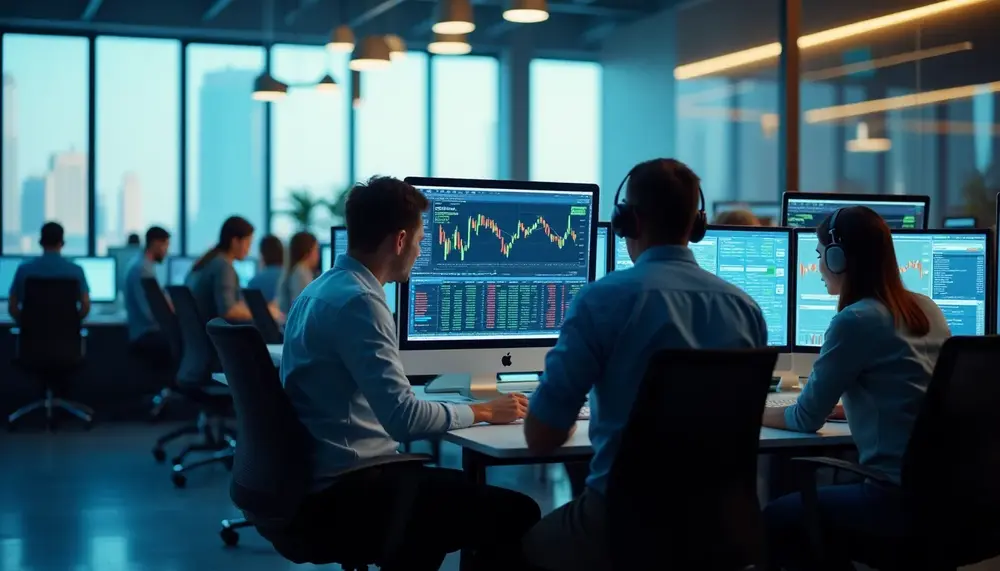
Trading floors, once bustling hubs of human interaction and open-outcry systems, have evolved into hybrid spaces combining traditional expertise with electronic efficiency to adapt to modern financial markets. While digital platforms dominate today’s trading landscape, the legacy of physical trading...
The article explains the concept of liquidity in the cryptocurrency market and its importance in trading. It discusses how liquidity affects the speed of transactions, the stability of prices, and the overall trading experience. It also provides pros and cons...
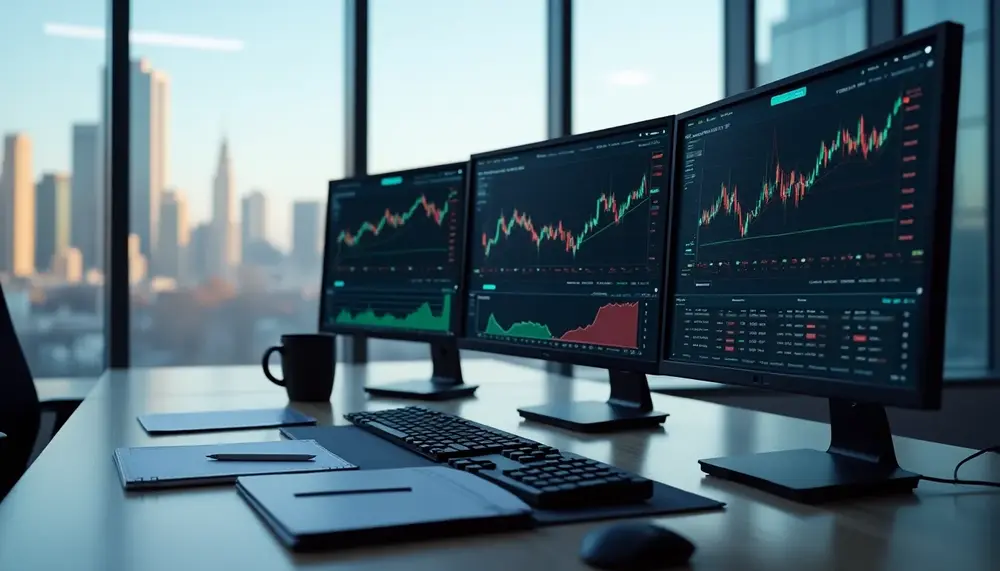
DeFi Quant Trading combines finance and technology by using complex mathematical models for trading decisions in the decentralized blockchain-based financial landscape, offering strategies like mean reversion, momentum trading, statistical arbitrage, and market making. Essential tools include data analytics platforms, algorithmic...
Koinly is a cryptocurrency tax management tool that automates transaction tracking across various exchanges and wallets, generating accurate and compliant tax reports for multiple jurisdictions. It offers features like real-time portfolio tracking, diverse cryptocurrency support, customizable dashboards, and integration with...

Altcoin trader fees, including maker and taker fees, significantly impact profitability and vary across exchanges with different fee structures. Traders should compare these costs on various platforms to optimize for lower transaction expenses while considering trading volume discounts and overall...

Energy trading matches supply and demand using contracts, digital platforms, and pricing models rather than physical energy transfer; key players include producers, utilities, traders, financial institutions, aggregators, regulators, and system operators. Essential products like spot contracts, futures/forwards, options, PPAs, and...
Decentralized Finance (DeFi) quantitative trading combines transparency, real-time data, and algorithmic precision to revolutionize financial markets by enabling innovative strategies like statistical arbitrage and leveraging on-chain data for predictive accuracy. This paradigm shift democratizes finance, offering opportunities for both experts...
Trading Ahead involves market makers prioritizing their own trades over clients', undermining investor interests, and is distinct from front-running or insider trading; regulation like FINRA Rule 5320 aims to maintain fairness in the markets by preventing such practices....
Trading is the act of buying and selling financial instruments for profit, while financial markets are the structured environments where such trading occurs. Modern trading relies on technology, regulation, risk management, and sufficient capital; day trading involves high risks, fees,...
For 2025, the IRS is enforcing stricter reporting and transparency for crypto and FX traders, requiring detailed transaction records, new forms like 1099-DA, immediate reporting of large transactions, and clear distinctions between capital gains and ordinary income. State-level rules may...
Trading is the active exchange of assets to profit from price fluctuations, requiring strategy and risk management; key types include day trading, swing trading, scalping, position trading, and algorithmic trading. Mastery of essential terminology and a solid strategy are crucial...
A true trading system is a precisely defined, rule-based process for making consistent decisions, while modern exchanges use automated matching and transparency; building such systems requires clear rules, risk management, backtesting, and ongoing refinement....
A trading floor is a physical space where financial instruments are traded, facilitating transactions and liquidity in markets through both traditional methods and modern electronic systems. It serves as a dynamic hub for traders to interact, execute trades efficiently, and...
DeFi, or decentralized finance, leverages blockchain technology to enable peer-to-peer transactions without intermediaries like banks, enhancing accessibility and reducing costs. It utilizes smart contracts for automation and transparency while offering diverse financial services that promote inclusivity in the global market....