Table of Contents:
In the past, the world of trading was seen as an exclusive club for the elite, with access to stock exchanges like Wall Street. However, a transformative shift is taking place, ushering in the era of what we call the Evolution of Retail Trading. This democratization of trading means that anyonewith an internet connection, regardless of their financial background, can now participate in the previously exclusive world of trading.
Introduction: The Changing Face of Trading
The global financial landscape is undergoing a significant transformation. Retail trading, once the province of professionals and the wealthy, has become democratized. This democratization is all about the shift from traditional brokerage services — which often required large amounts of capital and carried hefty fees — to more accessible and affordable online trading platforms. What we are witnessing is the Evolution of Retail Trading, a change that is sweeping across Wall Street and emerging on Main Street.
This revolution has been facilitated by a combination of technological advancements, regulatory changes, and evolving investor behavior. The rise of online trading platforms, which enable individuals to buy and sell securities without a traditional broker,along with a surge in the popularity of mobile trading apps, has put the power of the stock market in the hands of the everyday individual.
As a result, trading is no longer just for the Wall Street elites with sizeable portfolios. Today, every Main Street investor with a smartphone has the potential to become a trader. This accessibility has spurred a significant increase in the number of people engaging in retail trading, which is reshaping the financial markets as we know them.
The Roots: Wall Street and Investment Banking
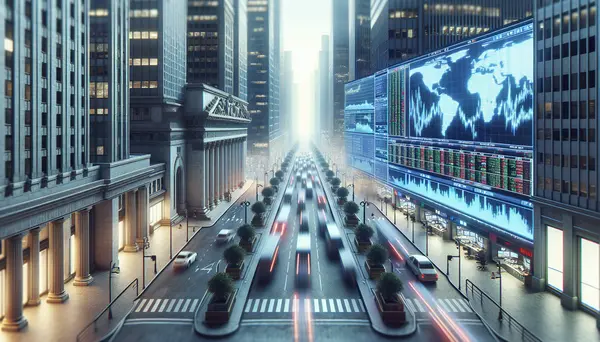
In the past, the financial powerhouse of Wall Street dominated the trading landscape. This financial district was filled with high-powered banks, investment firms, and brokers, all participating in the frenetic dance of buying and selling securities. The average individual was largely left out of the picture, as those without substantial assets or inside connections often found it impossible to break into the world of trading. The main actors were professionals involved in investment banking and hedge funds.
This was all well and good for those who had the right access, but it left out a large segment of the population. The financial markets were seen as an exclusive domain, far out of reach for most. This imbalance in the trading sector created a significant wealth gap, as the wealthy elite had the means and access to grow their finances while others strived to make ends meet. However, the winds of change began to blow, initiating the Evolution of Retail Trading and paving the way for the democratization of financial markets.
Pros and Cons of Trading Democratization
| Pros | Cons |
|---|---|
| Increases financial literacy among the general public | Increases the risk of inexperienced investors losing money |
| Lowers barriers to entry and makes trading accessible for all | Can lead to increased volatility in markets |
| Can act as a potential source of income or wealth growth | May exacerbate income inequality if only the wealthy benefit |
| Democratizes access to wealth-building traditionally dominated by elite investors | Increased risk of speculation, leading to asset bubbles |
Shifting to Main Street: Birth of Retail Trading

As technology advanced, the idea of democratizing trading became more of a reality. The internet broke down geographical barriers and opened up global markets to anyone with a connection. One of the most significant developments was the rise of online trading platforms. These platforms began to offer services once only available through physical brokerages, creating a new era in the world of trading.
Online brokerages and trading platforms enabled individuals to handle their own trades and investments without intermediaries. They were no longer dependent on traditional brokers, who often required large minimums and charged hefty commissions. This shift represented a major breakthrough in the democratization of trading and led to a sea-change in investor behaviour.
Mobile trading further escalated this democratization. The ability to trade from anywhere at any time fostered a new breed of traders – the individual retail trader. No longer was trading just for the Wall Street professionals. The average person could now delve into the world of securities, bonds, and shares, unleashing the true potential of the Evolution of Retail Trading.
The birth of retail trading has shifted the financial power from Wall Street to Main Street. Today, anyone with a small initial capital can build a diversified investment portfolio and potentially reap substantial profits. This level playing field has driven the rise in retail trading, creating a new paradigm in the world of finance.
Key Factors in the Evolution of Retail Trading
Several underlying factors have facilitated this historic shift in the world of trading. From technological developments to regulatory changes, let us delve into the crucial drivers of the Evolution of Retail Trading.
Firstly, the advent of the internet and subsequently, technology-driven trading platforms have powered this democratization. These online platforms have created an environment where anyone can participate in trading, negating the need for substantial initial capital.
Secondly, the onset of mobile trading applications has added to the accessibility factor. With merely a smartphone, today's traders can manage their investment portfolios from anywhere, at any time. The utilization of technology in this domain has allowed a broader demographic to get involved in the financial markets.
Thirdly, favourable regulatory changes have enhanced this accessibility. Regulators have enforced lower barriers to entry in recent years, making it more affordable for the common individual to invest in securities. The rise of low, or even no-commission trading models has further fuelled this trend.
Lastly, societal changes and shifts in investor behaviour have also contributed to the Evolution of Retail Trading. The younger generation's growing interest in financial literacy and investing signals a positive upsurge in retail trading. As a result, a broader spectrum of individuals is now getting involved in trading, further democratising the trading landscape.
In conclusion, these factors combined have created a conducive environment for the democratization of trading, and we are just at the beginning of this exciting journey. With the continuation of these trends, we can expect the Evolution of Retail Trading to make even more significant strides in the future.
Redefining Trading: The Role of Decentralization and Cryptocurrency

At the heart of the Evolution of Retail Trading is the emergence of a revolutionary form of currency—cryptocurrency. Cryptocurrencies like Bitcoin and Ethereum are digital or virtual currencies that exist on a decentralized platform known as a blockchain, which isn't controlled by any central authority.
This decentralization has significantly disrupted the traditional financial markets by offering an alternative to fiat money. For retail investors, cryptocurrencies offer a new medium of exchange, enabling one to participate in a wide range of financial activities previously limited to traditional market players.
Moreover, the rise of blockchain technology and cryptocurrency trading platforms has helped retail traders bypass traditional financial intermediaries, thereby reducing costs and increasing access. This situation is particularly beneficial for those in regions where traditional banking services are limited or unavailable.
Given their propensity for high volatility, cryptocurrencies also present attractive investment opportunities for day traders and swing traders who aim to seize the opportunities presented by rapid short-term price fluctuations. As such, cryptocurrency trading is playing a central role in the further democratization and Evolution of Retail Trading.
Finally, the integration of blockchain technology into trading has led to the creation of decentralized finance (DeFi) platforms, which promise to further democratize the financial markets by offering a transparent, accessible, and inclusive financial system. All these initiatives mark an exciting redefinition of trading, spurred by decentralization and cryptocurrency.
The Future: Democratizing Access to Financial Markets
The democratization of trading is still in progress, rewriting the rulebook for the financial markets. Looking forward, much of what we've observed in the Evolution of Retail Trading will continue to mature and develop, creating new opportunities and challenges.
It's anticipated that information technology will play an even more substantial role in supporting the retail trading sector. With enhancements in Artificial Intelligence (AI) and Machine Learning (ML), retail traders will be armed with sophisticated tools and analytics that were once only available to institutional investors.
Besides, regulators will be faced with the task of ensuring the continued stability and integrity of financial markets. They'll need to strike a balance between facilitating innovation and protecting consumers from potential risks associated with online trading.
On the supply side, traditional investment institutions are re-evaluating their strategies, adjusting to the growing influence of retail investors. One can expect increased competition in this area, with trading platforms offering more innovative and user-friendly solutions to attract retail traders.
In conclusion, the future of trading appears bright for the average investor. The digital revolution, coupled with the rise of retail trading platforms, has started to close the gap between Wall Street and Main Street. It is truly a democratizing movement, one that is likely to continue shaping the financial landscape in unforeseen ways.
Conclusion: A New Era of Financial Empowerment

We are indeed living in a monumental time, facing the dawn of a new era in financial trading. The democratization of trading, spurred by the Evolution of Retail Trading, has flung wide the gates of financial markets and welcomed all with open arms. As technology and regulations continue to change, a future where everyone has an equal opportunity to invest and trade is fast becoming a reality.
This seismic shift from Wall Street to Main Street doesn't mean the end of professional trading. Instead, it paves the way for coexistence, where professional and retail traders alike, fuel the market. Retail traders bring fresh capital, new perspectives, and increased market liquidity. Meanwhile, professional traders offer structured trading strategies, market stability, and experienced risk management.
This blending of retail and professional trading promises a vibrant, ever-evolving financial landscape. Together, we are on a path to an empowered global community of traders, breaking down financial barriers, and fostering wealth creation. As we further advance into the Evolution of Retail Trading, this financial democratization empowers each of us, amplifying our voice in the world of finance.
Dreams of a world where trading isn't just the privilege of a select elite, but a tool for all of us to grow and prosper, are not far-fetched anymore. No one knows what exciting advancements the future of retail trading holds, yet the transformation is in full swing. Welcome to this new era of financial empowerment, where Main Street is as relevant as Wall Street in the financial world.
FAQs on the Democratization of Trading
What does the democratization of trading mean?
The democratization of trading refers to the process through which trading in financial markets has become accessible to the average individual, thanks to technological advancements, reduced costs, and improved financial regulation.
How has technology contributed to trading democratization?
Technology has played a pivotal role in the democratization of trading. Through online trading platforms, mobile applications, and algorithmic trading, individuals can now trade from anywhere and at any time.
What impact has the democratization of trading had on the traditional Wall Street firms?
The democratization of trading has increased competition for traditional Wall Street firms and changed the trading landscape. Firms have to adapt to new technologies, and they face increased transparency and empowered retail investors.
What are the risks associated with the democratization of trading?
Despite numerous advantages, the democratization of trading also introduces various risks such as increased market volatility, heightened risk of market manipulation, and potential for individual financial loss due to lack of experience and knowledge.
Can anyone start trading?
Yes, anyone can start trading given they have a basic understanding of financial markets and compliance with regulatory requirements such as setting up a trading account and having sufficient capital, but proper education and research are strongly recommended.